Macy’s
Building a new way to connect app customers to Macy’s Personal Stylists.
What I did: User research, Information architecture, Interaction design, Visual design, Prototyping, Product strategy & planning
Overview
Macy’s offers customers nationwide access to a complimentary Personal Stylist service which provides an individualized in-store shopping experience. Customers who found and met with Personal Stylists in the stores, spent nearly 3x more per visit thanks to the highly personalized levels of service.
On average the program generates nearly $200M in annualized sales solely through in-store purchases.
Project goals
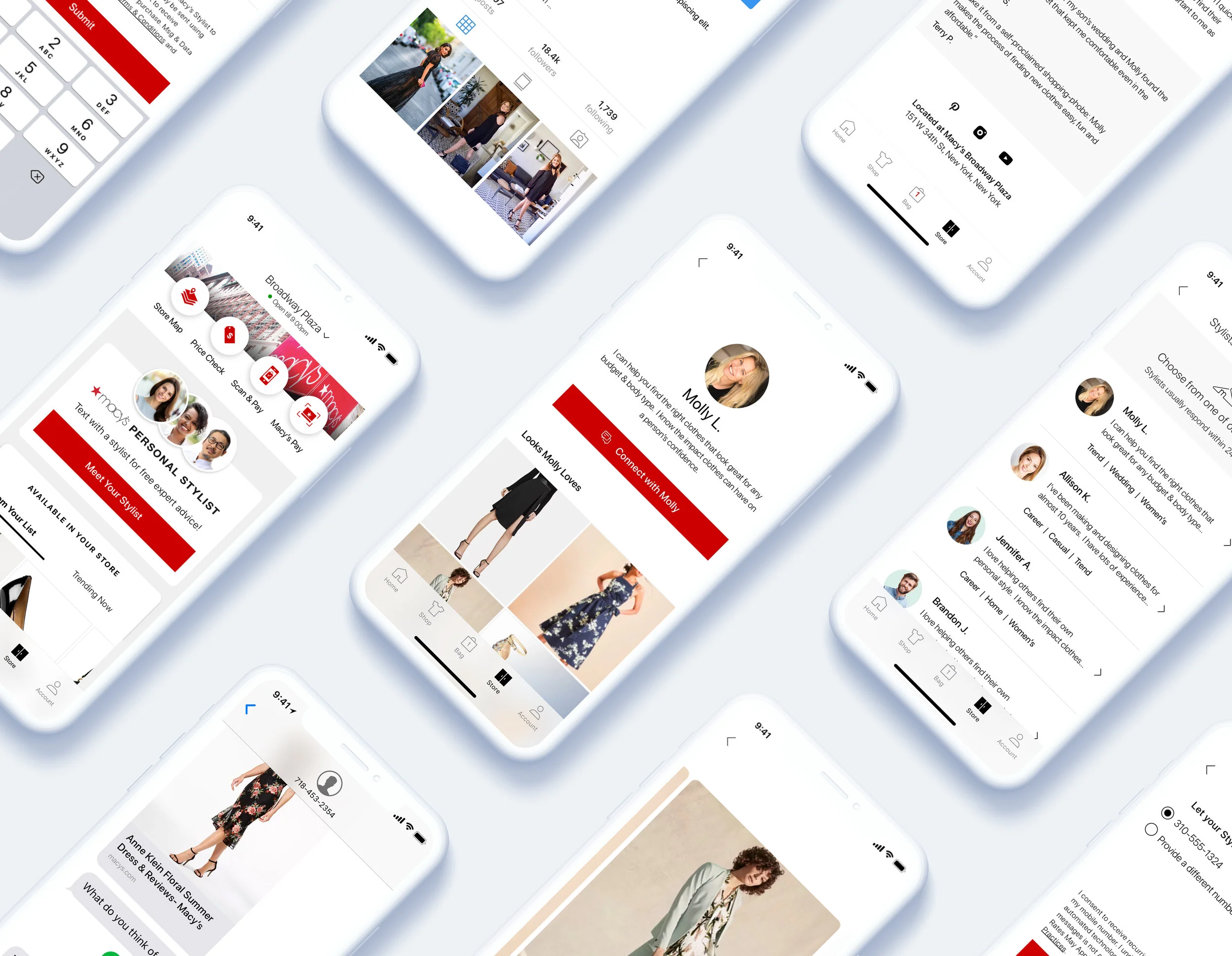
As the sole designer, I was responsible for introducing the Personal Stylist program into the app, and also enhancing the stylist-side experience, giving both parties the tools needed to establish a successful virtual stylist collaboration and ultimately encourage more in-store visits.
Customer goals
Give app customers a place to find and learn about stylists at their nearby store
Provide a way to let customers chat with stylists
Create tools that allow customers to receive virtual stylist advice and recommendations
Stylist goals
Allow stylists to have detailed bio pages to give them a place to showcase their skills
Make the tools stylists have easier to use so they can chat with new customers
Let stylists add new customers directly into their client book to make it easier to stay in touch
“Truly virtual stylist collaboration is something our stylists and customers have been asking from us for years. ”
— Mercedes Roling | Director, Macy’s Store Customer Experience
All eyes on Personal Stylist
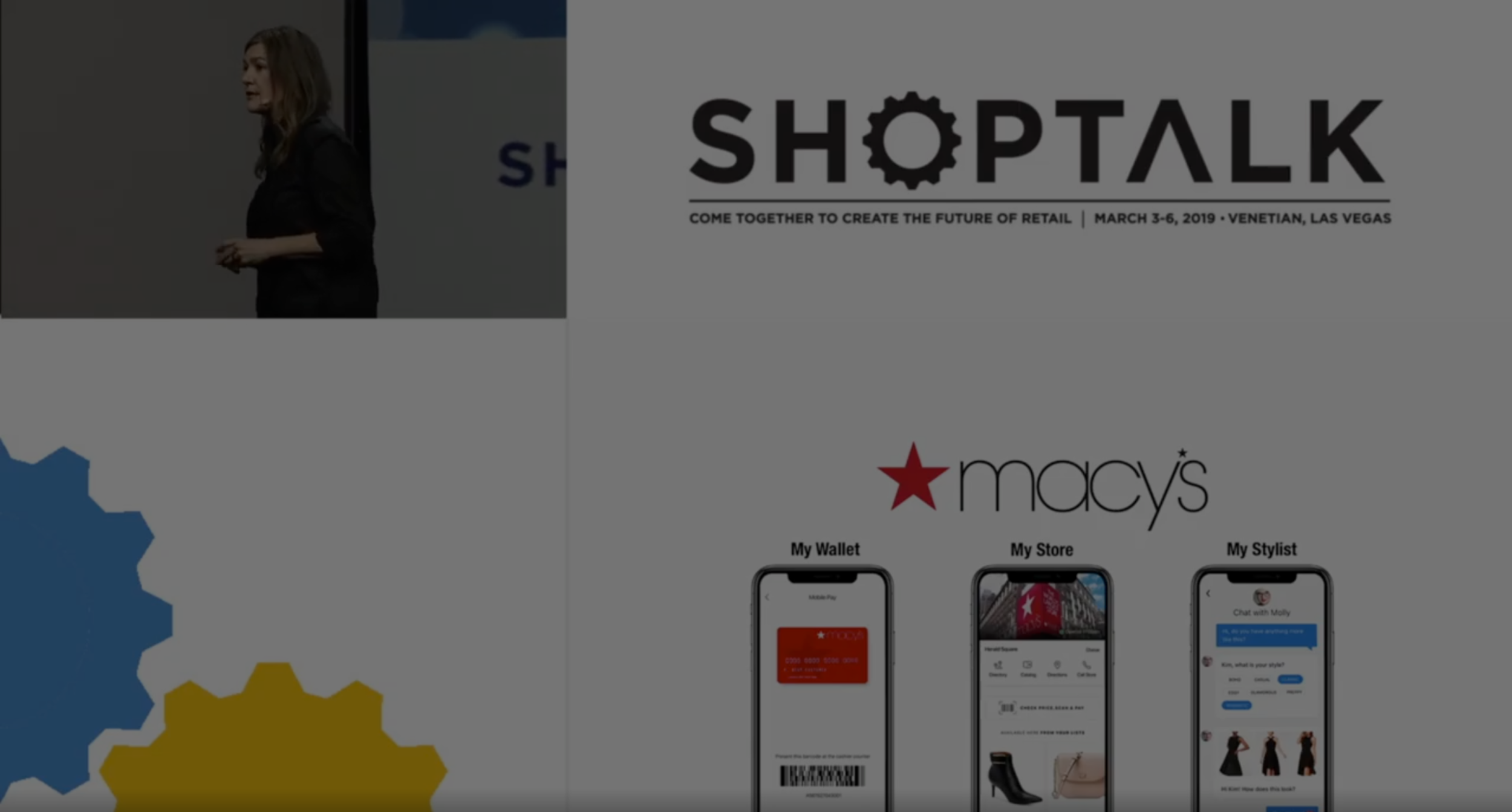
The new upcoming in-app Personal Stylist program (formally known as My Stylist) was one of the three main app in-store enhancements that were presented by Jill Ramsey, Macy’s Chief Digital Officer, at the retail industry conference, Shoptalk.
From the start of the project, there was high visibility from senior leaders on the success of the program.
Getting to know our customer
Macy’s has a series of personas each capturing a unique segment of its customer population. Although the initial focus for the feature was around creating an experience that would target the needs of our “Fashionable Spender”, I also began planning an in-depth research study that would help us identify any unknown customer motivations we could leverage to further enhance the experience.
I started by reviewing any existing secondary research and spoke with stylists directly to learn more about how they work with customers and what improvements they’d like to see in the way the program worked.
What People Are Saying
“Being able to talk with a stylist directly via the ease of text would be great. I’d want to be able to see and send photos too.”
— Shaini A.
“Relying only on email to talk to customers is slow and a poor experience.”
— Darlene D. | Macy’s Personal Stylist Manager
Identifying opportunities
I worked with the team (based in CA, NY, & GA) to take the customer information that was collected to create a journey map that outlined the steps customers took when interacting with stylists.
We used this to help us understand what customers were going through and where the app could help improve the experience.
Discovery
Partnering closely with the Sr. Product Manager assigned to the project, I lead early discovery meetings where we mapped out the release phases per feature set and coordinated with our engineering partners to began understanding any technical constraints we may encounter in updating Omniclient, the existing stylist side application.
I also performed a competitive analysis review across several larger retailers who provided stylist collaboration features as well as looked into startups like Tailor and Snap+Style.
Planning
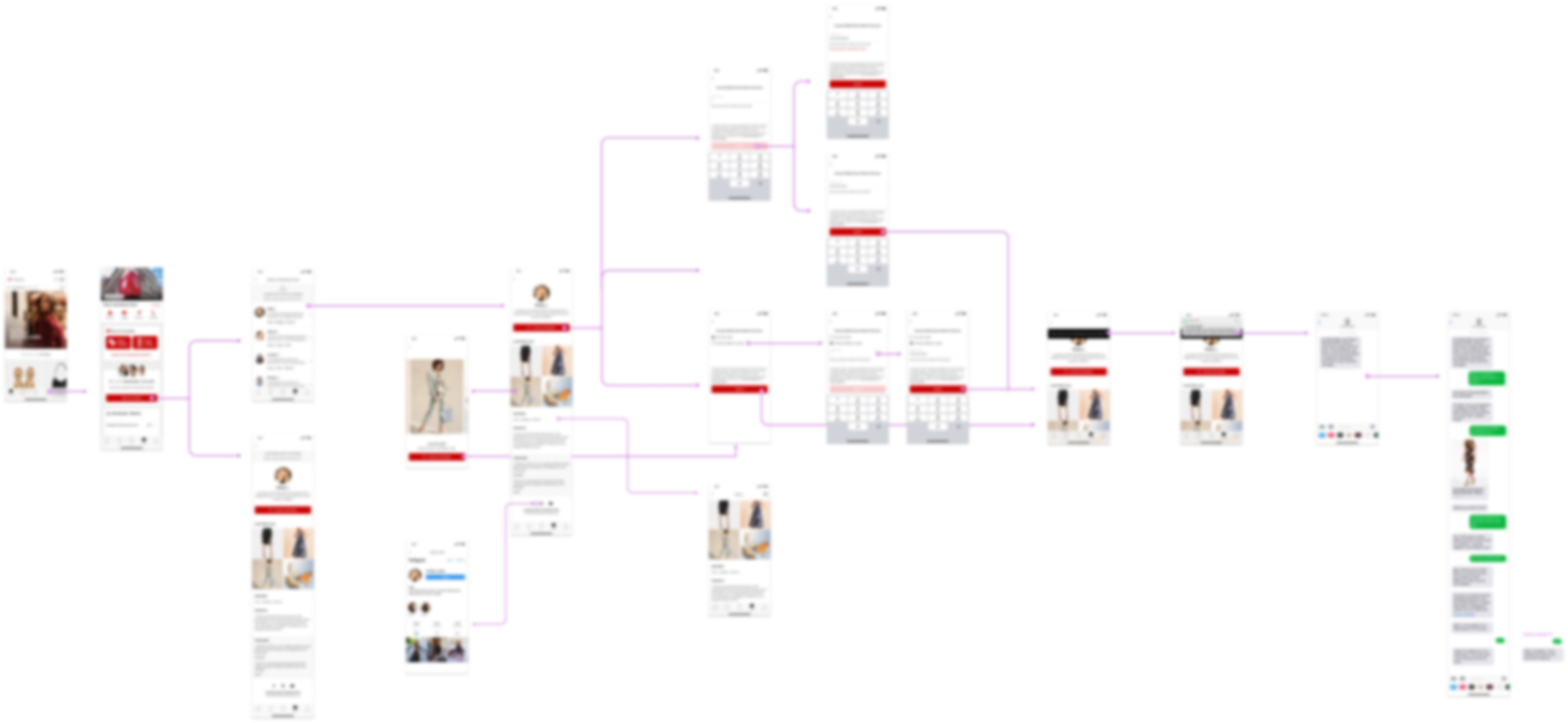
Once the team felt like we had identified key opportunities, we moved into finalizing what our target scope for the MVP would be. I used the MVP roadmap, early customer/stylist insights, and the journey map to build task flows that illustrated the paths customers and stylist would take.
These documents were important during the early phases of the project as a way to provide transparency to stakeholders as I presented what our goals were for the MVP. The task flows also allowed development teams to begin early planning around any new databases and architecture that would need to exist to support these upcoming enhancements.
Cross-functional ideation sessions
With the scope of the MVP in place, I lead several ideation meetings with my product partners to brainstorm possible experiences for the customer side of the experience. I created several variations of key screens in the customer flow and reviewed designs regularly with my manager, internal design team, product, & development partners to ensure alignment throughout the ideation process. Below is excerpt from some of the many early explorations.
I worked closely with our Sr. User Researcher to plan a remote testing session which would be used to test our design direction as well as help us learn even more about the intentions and motivations our customers may have for using a personal stylist service. Below are some screens from the Principle prototype I created.
Data-driven iterations
My research partner and I reviewed the responses and documented any key details, pain points, successes, and possible edits we heard from the customer interviews. I also went to Macy’s Union Square to share these comps in-person with stylists who would be participating in the MVP to get their feedback and thoughts on what they would like to have supported on their end.
Key Findings
Millennials would prefer to be connected to the first available stylist while older customers were more comfortable waiting for the stylist they selected to respond.
Testimonials, specialties, and inspirational images were important factors in choosing a stylist.
The current copy was unclear about clarifying if there were any costs associated with the program.
Further simplify the way customers can be added to Stylists’s contact book. Deep linking approach required too much effort for customers.
When a new customer reached out to them, Stylists wanted to be notified outside of Omniclient since they weren’t always nearby a tablet or POS
Stylists would like to be able to control their availability so customers wouldn’t try and reach out when they were away on PTO
This information was put together into a presentation deck by our researcher and would later go on to serve as a guide for future updates to the designs.
Final solutions
Taking care of our Stylists
Omniclient was the existing Macy’s internal facing web-based application that stylists used to keep track of clients, sales, and communications with customers. For the first several months of the project I was tasked with managing both the customer facing experience as well as the stylist side updates.
A major hurdle throughout the Personal Stylist project was first understanding what enhancements Omniclient could support as well as learning how to integrate app-based SMS into the application.
Part way through the project I was able to onboard a new designer to take over the Omniclient changes. I continued to monitor and review any updates that were made and I kept in close contact with the Omniclient product manager to consult on any complications or alternate scenarios that arouse from our changes to the application.
Pre-launch preparations
I coordinated and moderated a full end-to-end functionality testing session involving 2 stylists and 12 internal team members to perform a complete audit of our customer and Omniclient side updates. We identified any gaps and the team worked together to prioritize the fixes prior to launch.
In addition to the testing session, I created and presented a 20+ page training document that was distributed and used by the stylists to teach them how use the new Omniclient changes.
Results
On November 13th, we launched the Macy’s Personal Stylist Feature for both iOS and Android. Within a month, the pilot had become the most successful app in-store launch to date, generating more revenue in its first month than any other previously launched app in-store MVP.
11
— Stylists who participated in the MVP (Macy’s currently has 290+ Stylists)
$1.8M
— Est. annualized sales at the current scale / response time
64%
— of customers who engaged with the feature connected with a stylist
$47M
— Est. annualized sales upon increasing the scale of the feature
What’s next
After the first month, we launched an extensive customer survey study through Applause. The goal of this study was to understand the user experience throughout the process of selecting and interacting with a personal stylist, including the in-app experience, text messaging, and the in-store visit phases. Findings from this study will be paired with our product roadmap and be used to guide the next round of enhancements.
“I liked that she had pulled more than 10 outfits for me to try. She picked many items that I would never have tried - and they worked! It was like shopping with a friend, who is a pro!”
— Applause survey participant
